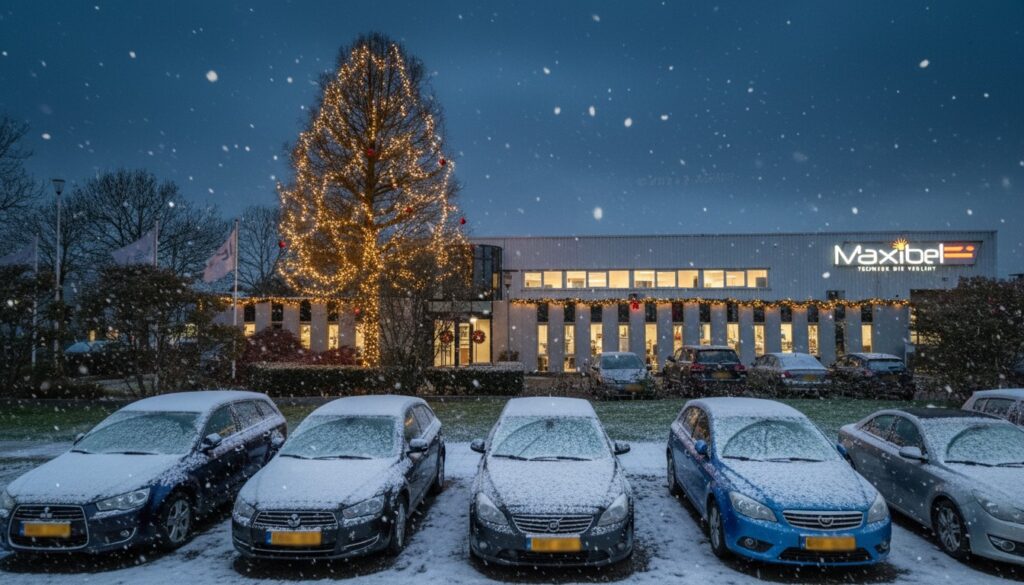
Nitrogen, permits, and… bats?
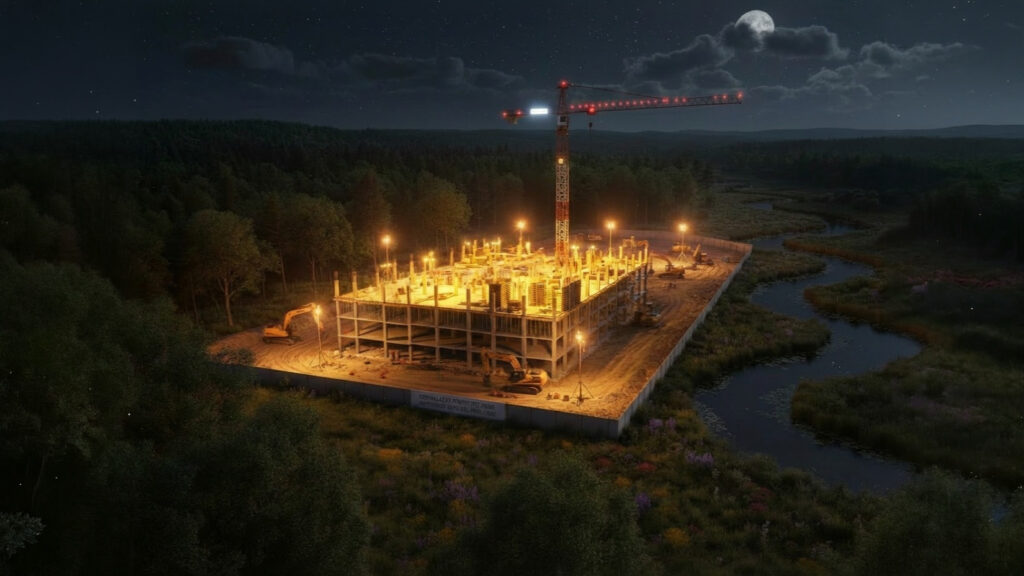
Building in or near a Natura 2000 site now demands the utmost from construction companies. The rules governing nature conservation are stricter than ever.
Bright white construction lighting disrupts bats’ flight paths and hunting behavior, which can lead to the immediate suspension of the project or the denial of the permit. The Nature Conservation Act requires clear mitigation measures.
Fortunately, this won’t cause any delays to your project. We have the perfect solution ready to go to illuminate your construction site in an environmentally responsible and safe manner. Amber lighting is often used to reduce light pollution in outdoor areas. But this warm light color offers even more.
With a color temperature of approximately 1,850 kelvin, this creates an atmospheric lighting effect that is particularly well-suited for:
- historic city centers and historic buildings;
- campgrounds and recreation parks;
- rural areas and estates;
- walking and biking trails;
- parks and nature reserves.
In the evening, the soft, golden light creates a calm and distinctive atmosphere. Especially in historic city centers, it offers a beautiful alternative to cool white LED light, which can quickly appear harsh or modern.
Our Amber E27 light source was developed as a retrofit solution. This means that, in many cases, the existing fixture can be retained. Only the light source is replaced. This simplifies the transition, minimizes installation work, and prevents properly functioning fixtures from being written off prematurely.
The light source has been independently tested:
1859 K color temperature, CRI 84 color rendering
1 , 565 lumens of luminous flux; 17.5 watts of power consumption
Due to its very warm light color and the limited emphasis on the blue part of the spectrum, this light source can also be part of a bat-friendly lighting plan. Of course, the fixture, the direction of the light, the illuminance level, and the operating times remain important as well.
Amber retrofit lighting combines ambiance, functionality, and the ability to retain existing fixtures. It’s an interesting solution for locations where the quality of light is just as important as the amount of light.
Why 42 Volt? The Forgotten Hero of European Industrial Safety

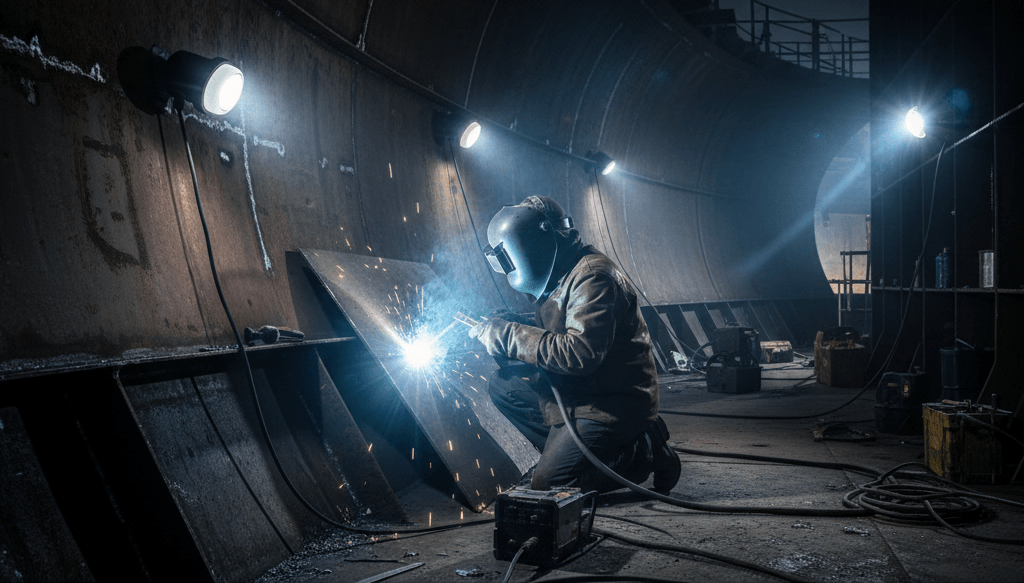
Imagine this: you crawl through a narrow manhole into a steel steam boiler, a storage tank, or the double bottom of a ship. It’s cold, damp, and extremely cramped. Your clothes are soaked with sweat, and you’re surrounded by conductive steel on all sides.
In such a confined, conductive space, a standard mains voltage of 230 volts is extremely dangerous. Even a minor insulation failure in a portable lamp can be fatal.
Nevertheless, for decades, the industry in the Netherlands, Germany, and Italy did not opt for 12 volts or 24 volts for temporary lighting and hand tools, but rather for a very specific voltage: 42 volts alternating current (AC).
Why exactly 42 volts? That wasn't a random choice, but the result of a clever balance between physics and safety engineering.
1. The Physical Danger: Humans as Conductors
Under normal conditions, our dry skin provides a significant amount of electrical resistance. But in a confined, conductive space, that natural protection is lost:
· Moisture and sweat drastically reduce the skin's resistance.
· Large contact surface: Because the space is so cramped, your knees, back, or arms are constantly brushing against the steel walls.
· No escape route: If you experience muscle spasms due to an electric shock, you won't be able to let go of the source or jump away.
International standards (such as NEN 1010 in the Netherlands, DIN VDE 0100-706 in Germany, and the CEI standards in Italy) have set the safe limit for touch voltage in alternating current under normal conditions at a maximum of 50 volts AC (SELV: Safety Extra-Low Voltage).
But why didn't they just go with 12 volts or 24 volts back then?
2. The Voltage Dilemma: Safety vs. Power
If safety were the only criterion, 12 volts would be the logical choice. But here, engineers ran up against a fundamental law of nature:
P = U × I (Power = Voltage × Current)
Before the invention of Maxiled lighting, inspection lamps relied on incandescent bulbs and heavy-duty motors. An average set of work lights or a small angle grinder could easily consume 100 to 300 watts.
· At 12 volts: To deliver 100 watts of power, a current of more than 8.3 amps is required.
· At 42 volts: Only 2.38 amps are needed to produce the same 100-watt power output.
When the voltage is too low (such as 12V) and the current is high, there is an extremely high voltage drop across the cable. To compensate for this, extremely thick, stiff, and heavy copper cables were required—which were completely impractical in tight spaces.
42 volts AC turned out to be the optimal sweet spot: the voltage remained well below the critical safety limit of 50 volts AC, but the current remained low enough to allow for the use of flexible, manageable cables.
3. European Harmonization: Germany, the Netherlands, and Italy
The fact that 42 volts AC became the standard specifically in the Netherlands, Germany, and Italy was due to the close interdependence of European heavy industry in the 20th century:
· Germany (VDE) as a pioneer: German heavy industry and shipyards were among the first to establish strict requirements for “Besondere Räume mit leitfähiger Umgebung.” German manufacturers began producing 42V safety transformers and lighting on a large scale.
· The Netherlands and Italy: With their extensive shipbuilding industries (such as the shipyards along the Meuse and Scheldt rivers, and Fincantieri in Italy) and petrochemical industries, the Netherlands (NEN) and Italy (CEI) adopted these standards to ensure the interchangeability of equipment and to harmonize workplace safety.
4. Why not just use battery-powered lights?
With the rise of LED lighting and modern batteries, the question seems logical: why aren't we all switching to right-angle battery-powered flashlights?
Although battery-powered lighting is ideal for quick inspections, it has a major practical drawback when it comes to heavy maintenance work:
· Capacity for a full workday: An intensive work shift during a maintenance shutdown can easily last 8 to 12 hours. Portable battery-powered lamps simply do not provide enough continuous light output to last a full workday at full strength.
· Logistics in confined spaces: Changing batteries requires a technician to leave the confined space, or for additional equipment to be passed through the manhole each time.
A permanent 42V system with a transformer located outside the room ensures uninterrupted, powerful lighting for the entire duration of the work.
Conclusion
The decision to use 42 volts AC is a wonderful piece of engineering history that illustrates how engineers had to strike a balance between human physiology, power requirements, and practical feasibility on the shop floor.
Still, working with lower voltages in mains power supplies also presents its own unique electrical engineering challenges, especially when it comes to cable lengths and protective measures…
What has been your practical experience?
Do you still regularly work with 42-volt systems in your industry, or have you switched over? And a question for the electrical engineers among us: how do you handle the maximum cable length at 42 volts? Did you know that with a 50-meter cable (2.5 mm²), the short-circuit current at 42V drops so much that a standard circuit breaker often no longer trips immediately in the event of a short circuit? How do you ensure safety in practice?
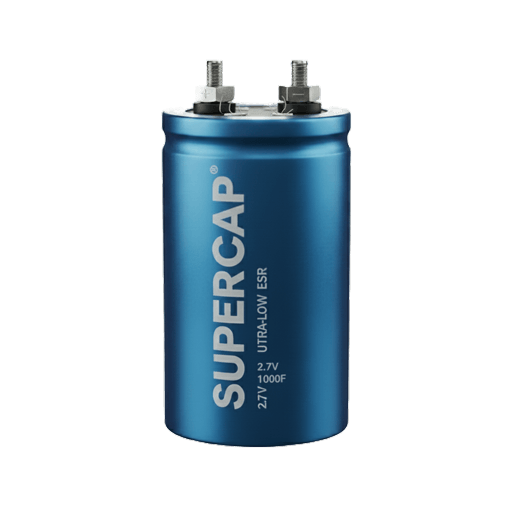
Not a battery, but a supercapacitor as the power source
Does transporting emergency lighting cost you more time and money than necessary due to hazardous materials surcharges and paperwork? There’s an easier way.
Conventional batteries may be subject to dangerous goods regulations when transported. This includes special packaging requirements, additional fees, and restrictions imposed by carriers.
Our supercapacitors are shipped fully discharged.
As a result, this solution does not require a separate shipment:
✓ No special packaging
✓ No paperwork or surcharges
✓ No damage from deep discharge during storage
You'll also save time right away on-site.
You don't have to wait 24 hours for the battery to charge: the fixture is ready to use within a few minutes.
After just one hour of charging, it provides up to 240 minutes of emergency lighting.
Lower transportation costs. No unnecessary delays. And a safe workspace on-site faster.
Curious about what supercap emergency lighting can do for your project? Feel free to contact us.